APFC Panels.
Automatic Power Factor Correction — reduce reactive power demand,
avoid utility penalties, and lower your energy costs.
Reactive power correction that pays for itself.
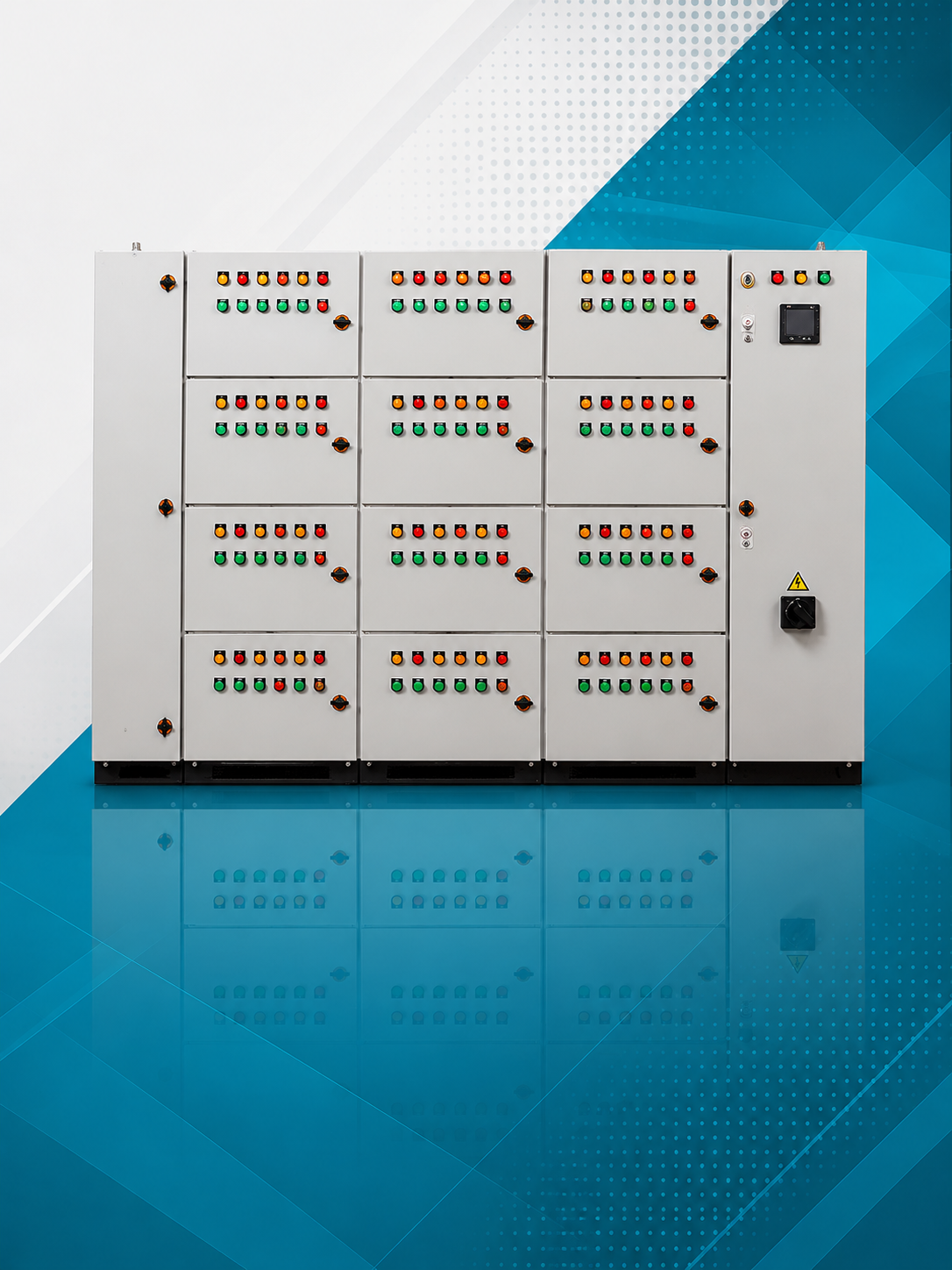
Poor power factor increases reactive current demand, raises electricity consumption, and attracts utility penalty charges. An Automatic Power Factor Correction panel continuously monitors the power factor of your facility and automatically switches capacitor banks in and out to maintain the target power factor — typically 0.95 or above.
We design APFC panels using high-quality capacitors, thyristor or contactor switching, and microprocessor-based power factor controllers sized to your facility's reactive power demand and load profile.
| Voltage Rating | 415V AC, 3-phase, 50Hz |
| Capacitor Rating | 25 kVAR to 1000 kVAR total |
| Target Power Factor | 0.95 to 0.99 (adjustable) |
| Switching Type | Contactor / Thyristor switching |
| Controller | Microprocessor-based PF relay |
| Capacitor Type | Dry-type APFC capacitors, self-healing |
| Harmonic Filter | Detuned reactors (optional) |
Automatic, precise power factor management.
Automatic Switching
Microprocessor-based power factor relay continuously monitors PF and switches capacitor stages in/out within milliseconds to maintain target.
Self-Healing Capacitors
Dry-type, self-healing polypropylene capacitors designed for high switching cycles and extended service life in industrial environments.
Harmonic Detuning
Optional detuned reactor (tuned to 189 Hz or 134 Hz) prevents resonance and protects capacitors from harmonic distortion on non-linear loads.
Power Quality Metering
Real-time display of power factor, voltage, current, kVAR, kWh, and THD with historical logging on premium PF relay models.
Thyristor Switching (TSC)
Optional thyristor-based switching for zero-crossing capacitor connection — eliminates switching transients for sensitive process loads.
Capacitor Protection
Individual capacitor protection by fuse or MCB, thermal relay on contactors, and surge arresters to protect against overvoltage transients.
Typical applications